ServiceCore: Scaling Complex Workflows
Key Takeaways
When working in brownfield software development, it’s important to start with small change and then accelerate gradually at first.
Maximalist component design provides clear guidance to future functionality that needs development post-Beta.
A mix of qualitative and quantitative research methodologies ensure technical alignment with emotional reactions to products.
Software & Skills
Figma, Adobe Creative Suite, Pendo, Data Dog, Claude Cowork, Dovetail, Gemini, Cursor
Icon Design & Systems, Illustrations & Illustration Systems, Color Systems, WCAG 2.1 Accessibility Guidelines, User Centered Design, Atomic UX Design, Semantic UX Design, Scaling Platform Design
Summary
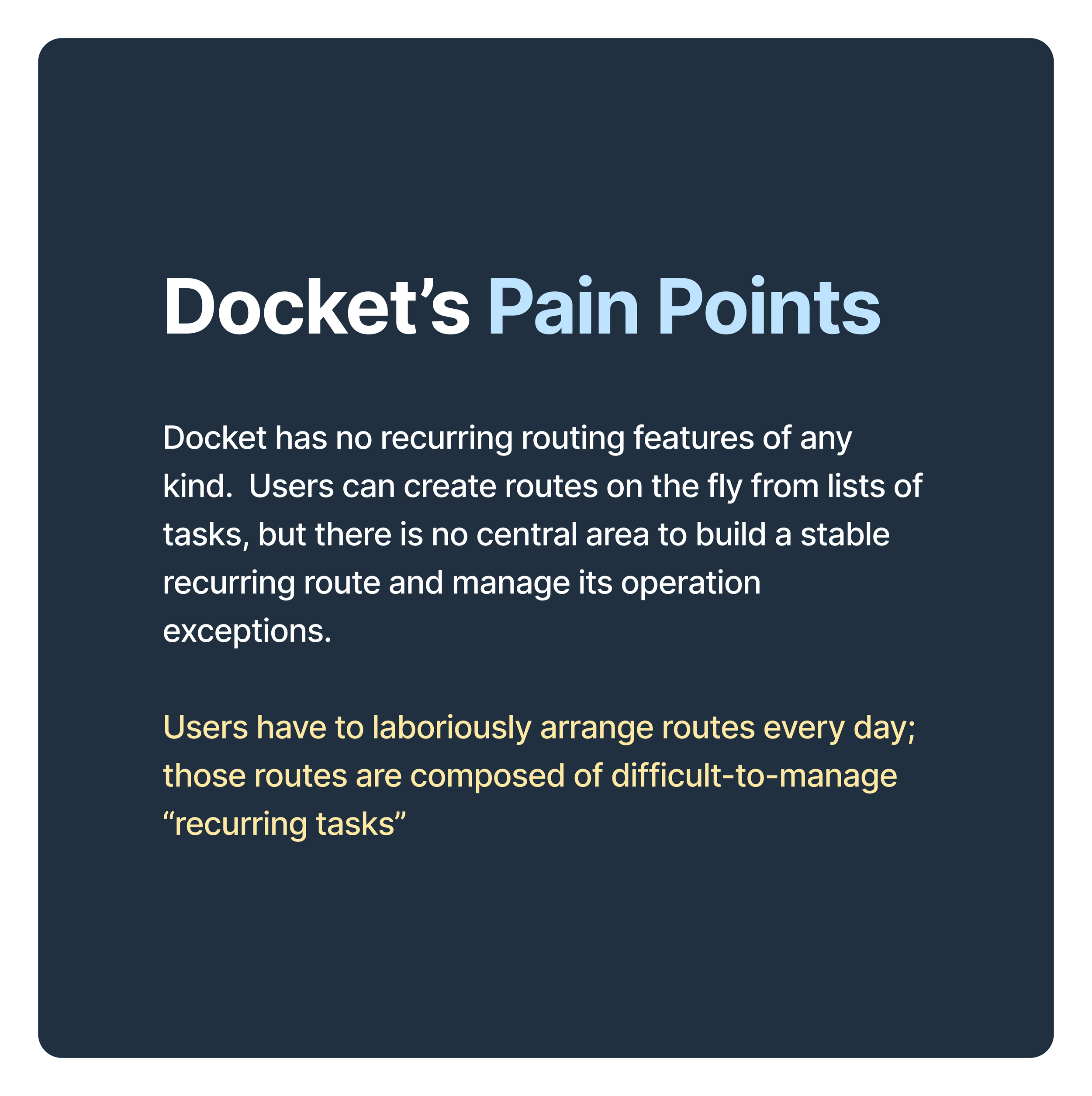
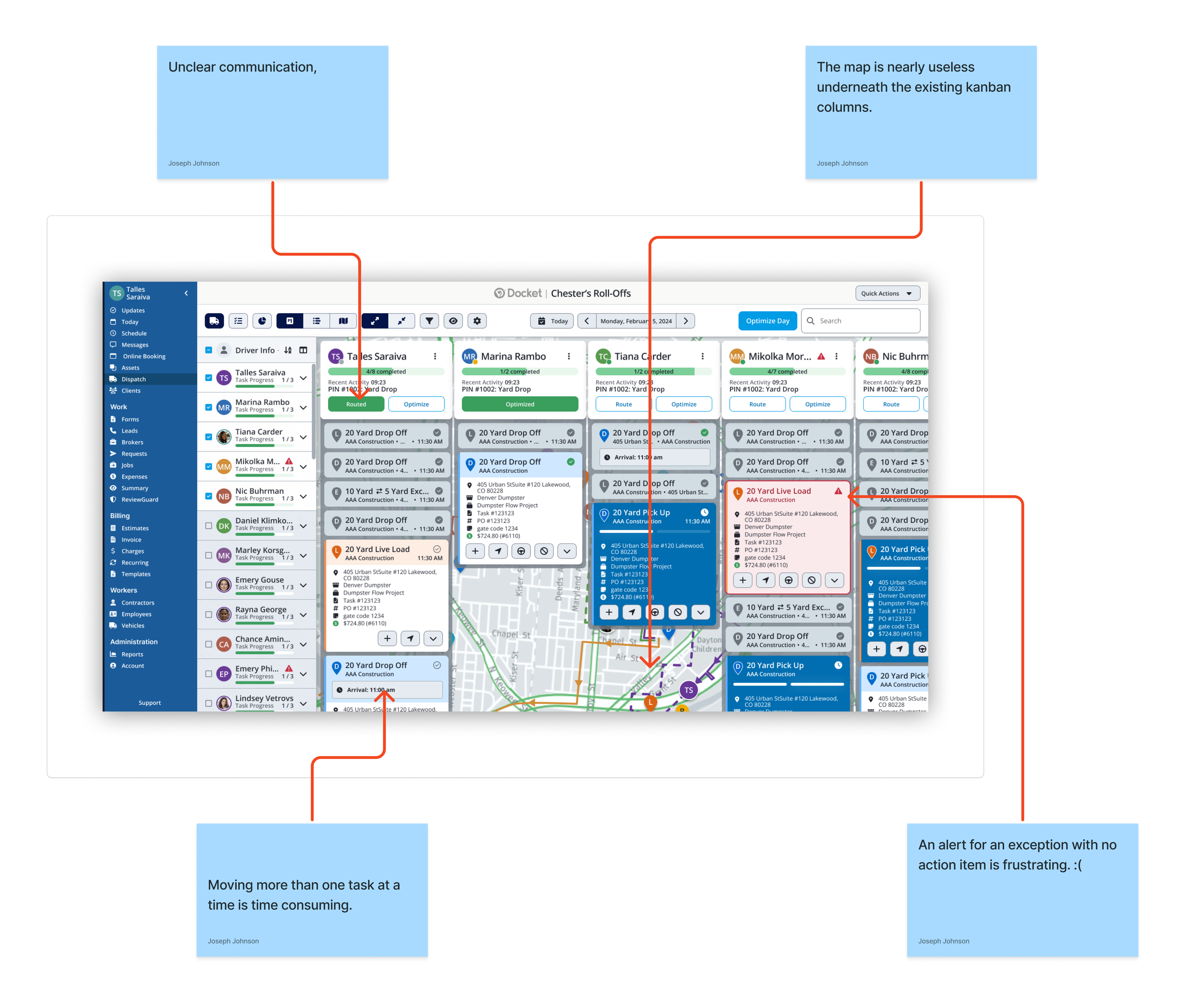
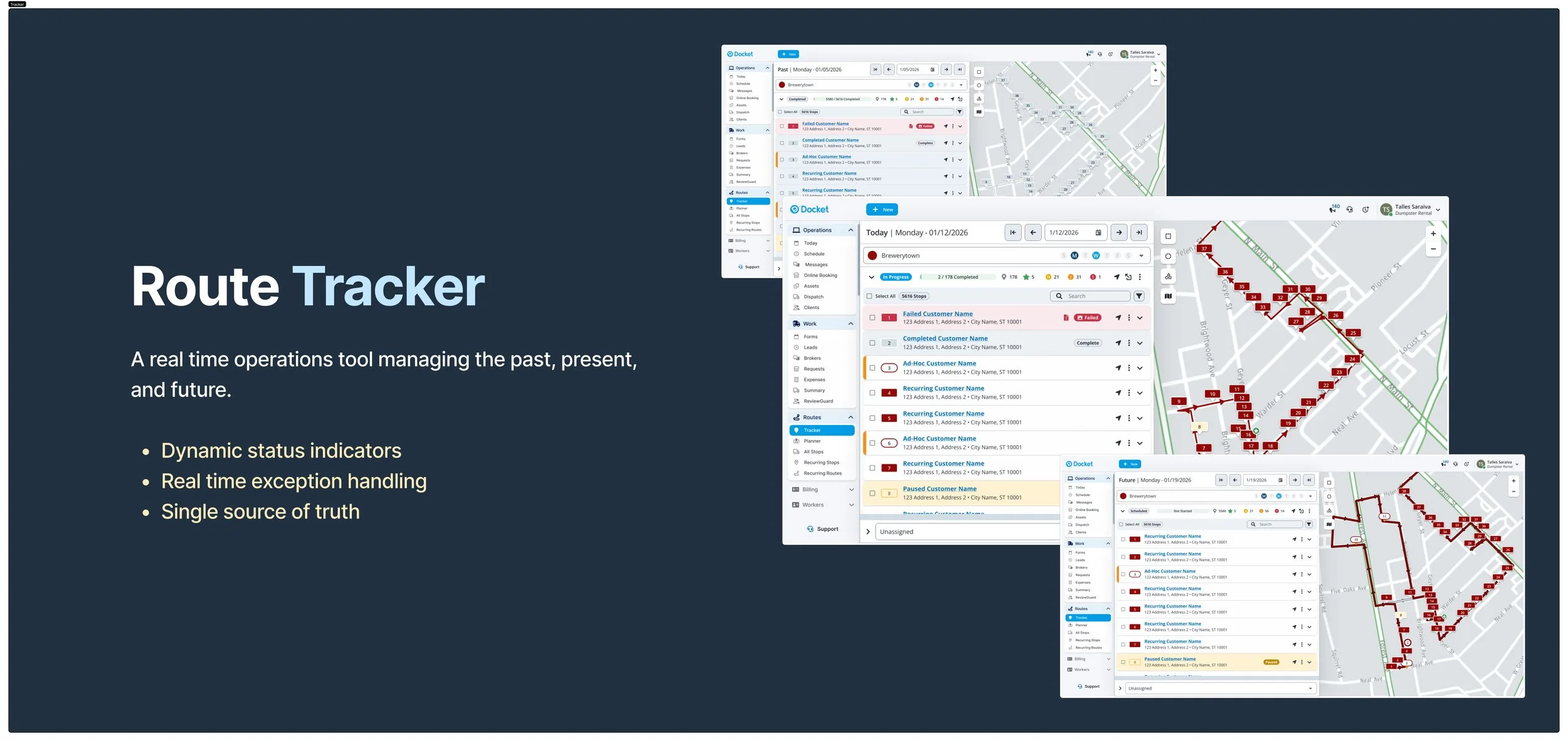
In late 2025, Docket wanted to expand from their offering from transactional solid waste rolloff services to high-frequency, recurring Commercial & Residential trash hauling operations. Operating a C&R trash route was nearly impossible in Docket, requiring more than 3 hours a day in dispatch effort.
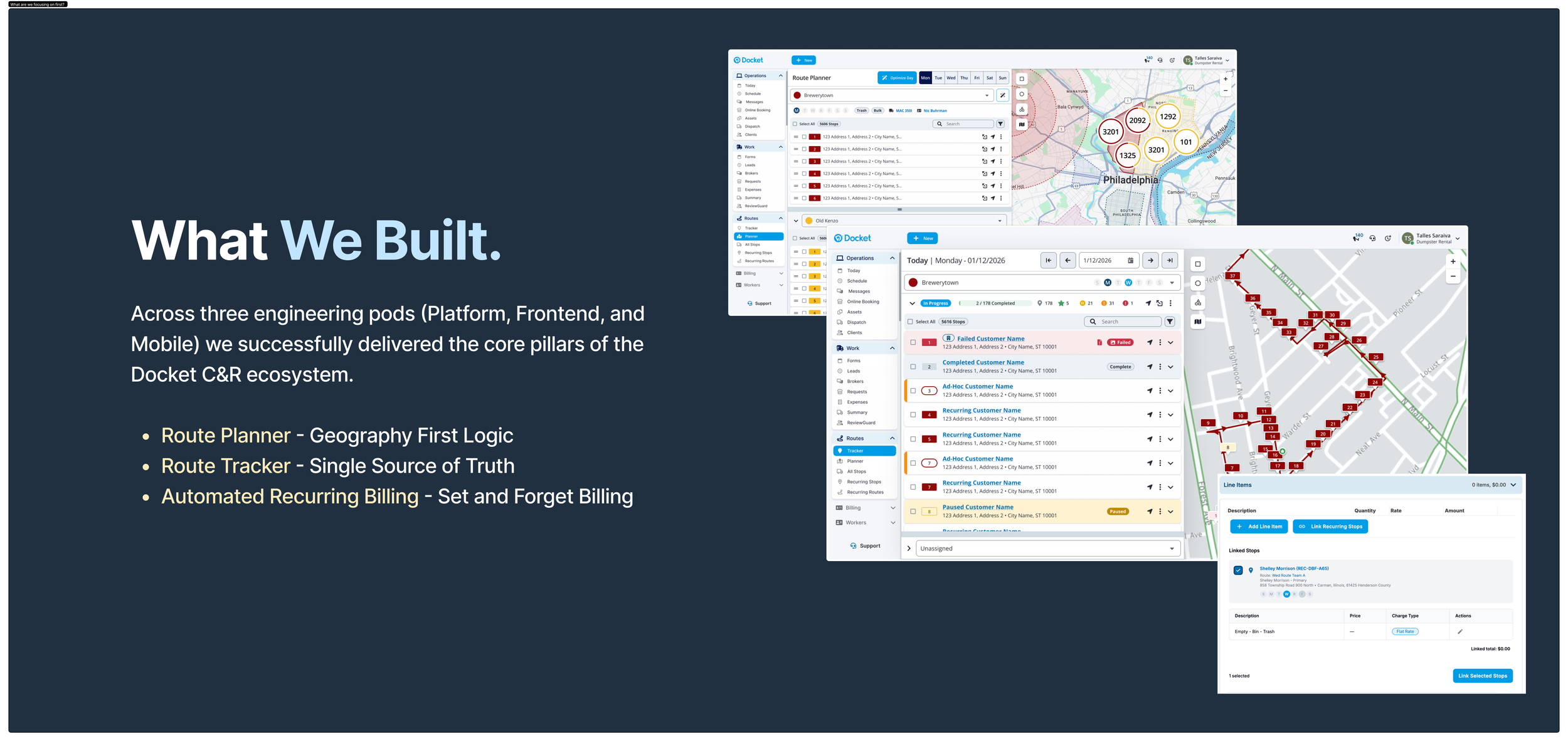
I led the design strategy to transform a legacy ERP architecture into an automated, geography-first, routing and billing ecosystem that would enable Docket to open an entirely new vertical for existing customers and pursue new leads.
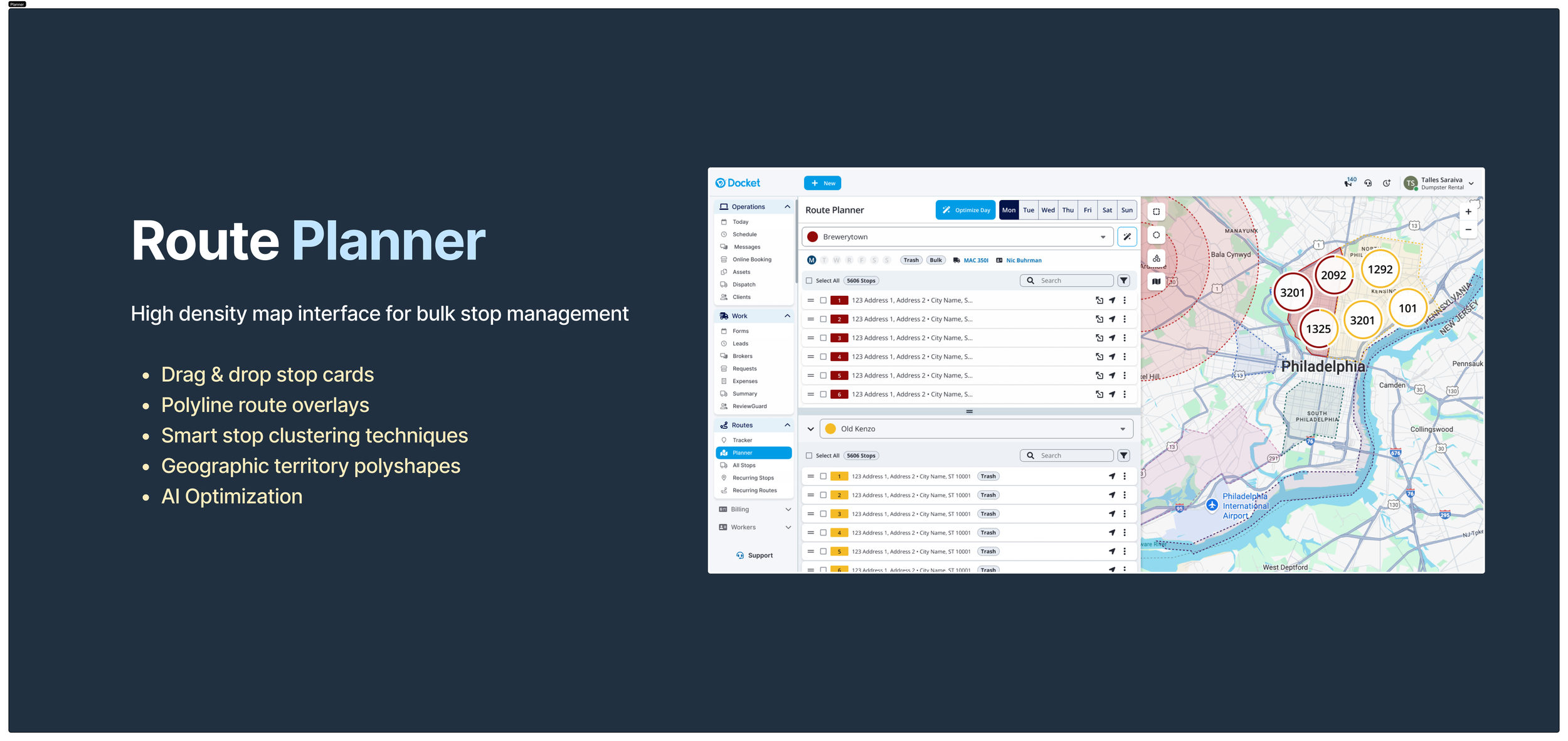
This required the creation of a new library of scalable components capable of handling thousands of recurring records and a system that surfaces exceptions quickly for human consideration.
The Process - Competitive Audit, Data Synthesis, Continuous Design
We evaluated high-tier (ACMS, Service Titan) and low tier (DRS, Routeware) competitors to establish “Blue Ocean” opportunities in usability. It’s critical to identify these opportunities, they are our right to win in the market.
We utilized Gong (sales & support calls), Dovetail (UX research), Maze.co (UI usability data), and Gemini to quickly synthesize and map customer pain points from existing research stores.
Since time was of the essence, we had to move the entire product and development organizations simultaneously. While back-end entities were still fluid, we utilized a maximalist design approach, building components for an ideal end state to guide engineering toward future-proof requirements.
Components, Focus, and Cognitive Overload
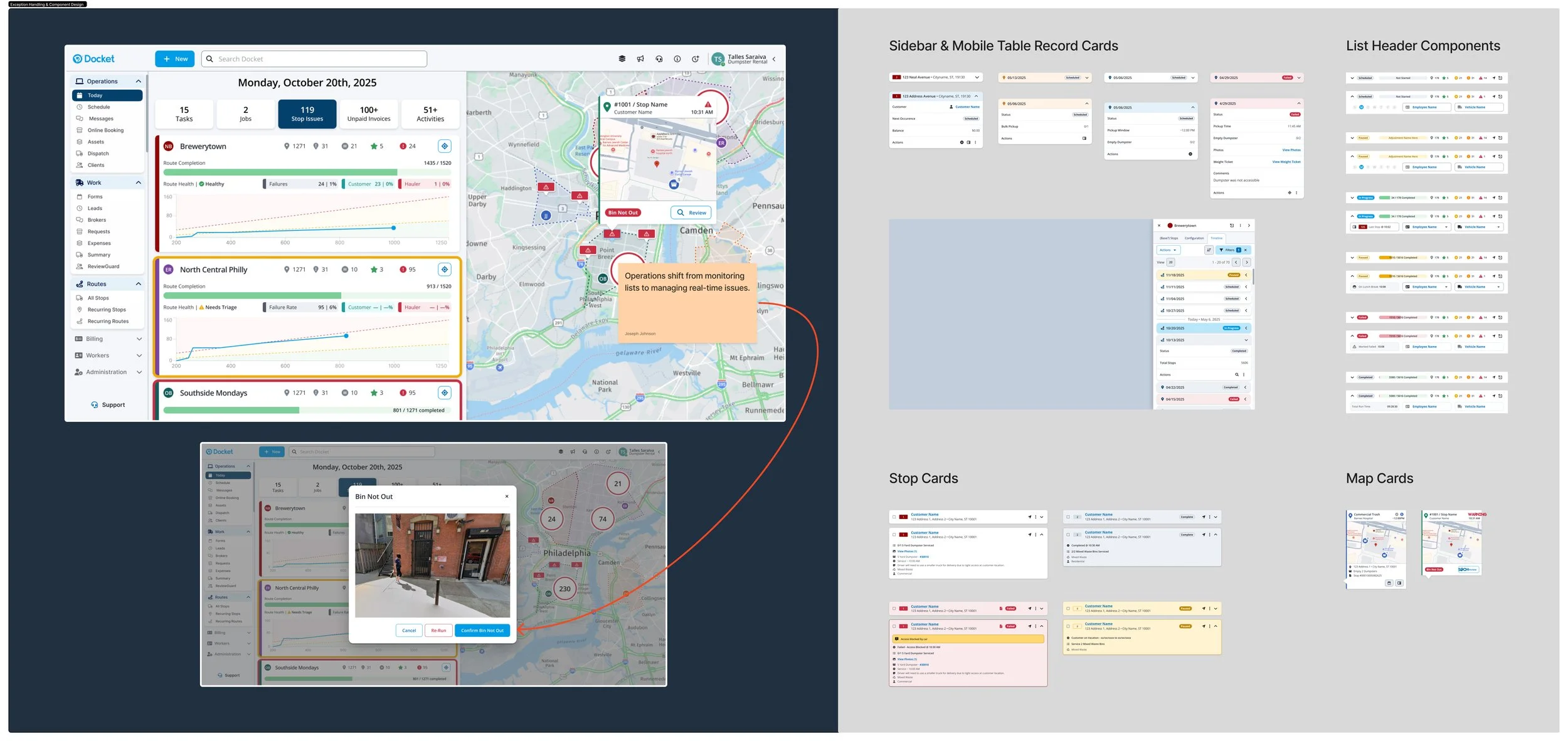
It was clear from the outset of the project that Docket’s baseline component set needed modification to successfully scale operations from everyday dispatching to exception triage and low touch operation.
Component design is the heart and soul of UI work. It will always be my favorite design challenge.
We produced a full set of components that would function for both our more massive C&R requirements and be backwards compatible with our existing rolloff paradigm. By treating domain entities as fluid maximalist components early in the process, we prevented the architecture of the past from hindering the efficacy of our future. Our goal was reducing information density overall to allow users to focus on problems rather than scanning for problems.
Impact
Closed beta launched in February of 2026 to immediate positive reception. All beta customers immediately saw value as dispatching tasks shifted from schedule building to exception management. Users saved up to three hours daily in saved operation hours.
I love this, I could kiss you! - Actual Review
Maze testing showed a 50% reduction in time-to-completion for identifying service failures and their underlying causes.
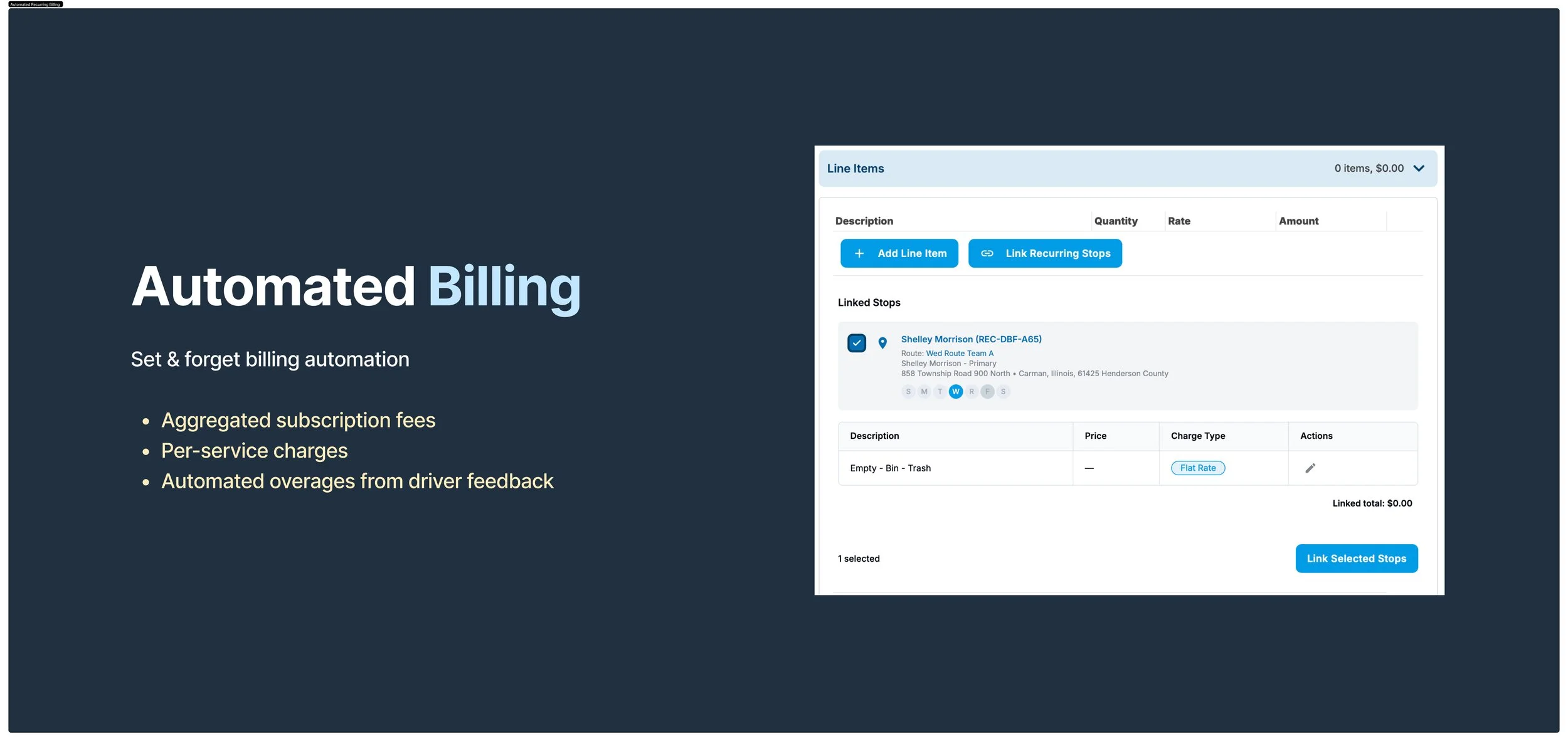
Manual errors in billing were eliminated for overages and stop operation via linked templates that paired with mobile app updates.